
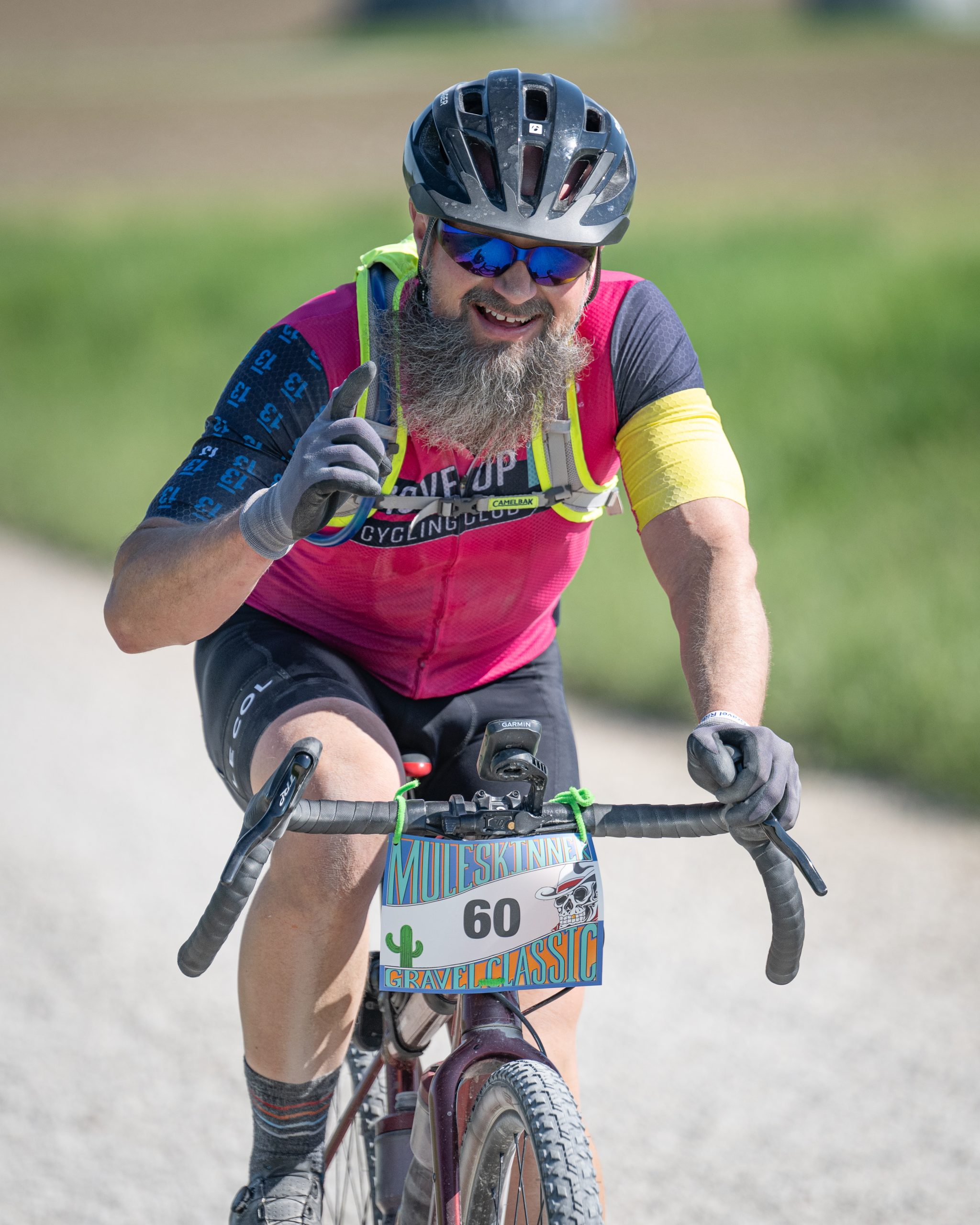
I love having moments of clarity on a topic that are so simple, it’s almost silly to even call them moments of clarity. The answer to the title of this section—“Do you need to race?”—can be expanded to: “Do you need to race to justify taking training seriously, hiring a coach, doing interval training, or worrying about other factors that impact performance, like bodyweight or equipment?”
The short answer is no.
Training vs. Racing
I’ve always known the correct answer was no, but my go-to response to an athlete was usually something like, “No, but I think having events to anchor your season and provide goals to guide training is really helpful.” For a while, I even started to believe that having an event was almost mandatory—that without something on the calendar, it would be too easy to get lost. I still think having an event focus is beneficial. However, the clarity I’ve come to is that those “events” don’t need to be competitive or even formal events at all—they can just as easily be a “season” or a specific goal, such as breaking 1000 watts in your sprint, that provides your training structure.
As I race less each year, I realize I’ve always loved the process and structure. Training hard and achieving goals is, for me, often more fun than competing. So why race at all? That’s a question I’ve asked myself many times. The reason is separate from why I train: I love the adrenaline rush of competition. I love the strategy and intensity of pushing my limits. I love how toeing the line forces me outside my comfort zone and makes me confront hard mental battles—confidence, comparison, execution. A bike race puts all of that in your face.
But again, racing is separate from training. I do shape my training around goal events, but even without them, I have zero doubt I’d still find motivation. I love the process, plain and simple. And there are plenty of benefits to being super fit beyond toeing the line at a bike race.
Why Fitness Matters (Even Without Racing)
Being fit means you can hang on the local group rides, explore new routes with confidence, or help a friend move without wrecking yourself. It means loading a box truck of heavy equipment, or weed-eating and driving stakes all-day to set up a cyclocross course. It even means running fast during the inevitable zombie apocalypse.
And this ability to train—with motivation, progressions, passion, and goals—without a race or event to anchor everything, isn’t unique.
Cycling vs. Gym Culture
Consider the numbers. There are probably 75,000–100,000 cyclists competing in sanctioned and unsanctioned events each year in the US. That’s only 0.15–0.2% of the total population of people who ride bikes. Meanwhile, the U.S. has about 64 million gym members. Studies estimate 20% of them focus on bodybuilding or fitness-style training, but if we conservatively say only 5% are truly serious, that’s 3.2 million people training at the same intensity most competitive cyclists would, just with different goals.
Here’s the kicker: just like in cycling, only 0.15–0.2% of those gym members (roughly 1 in 1000) actually compete in things like CrossFit, Hyrox, powerlifting, or bodybuilding.
So if most people aren’t competing, what’s keeping them motivated? For many, it’s the idea of “seasons.”
The Seasons Concept
Serious gym-goers cycle through phases much like cyclists: bulking phases to gain size and strength, cutting phases to lose fat while maintaining muscle, or strength-focused blocks to push power and capacity. They periodize their training, anchoring their goals not to events, but to phases or seasons.
I’ve seen this same concept play out in my own training. This year, I’ve been heavily focused on improving my bench press strength. Initially, I focused on pure strength and made slow but steady progress. But by spring and summer, as racing picked up and my body weight dropped a little, my progress plateaued. I eventually realized that if I wanted to keep moving forward, I needed to shift gears—eat more, train for size, and build muscle mass to support strength gains.
- Winter: Pure strength focus + maintenance aerobic work → steady bench press progress
- Spring: Still focused on strength, but added racing and aerobic volume → progress started to stall
- Summer: Strength focus while racing more → plateaued, strength even dipped a little bit, bodyweight dropped
- Late Summer / Now: Switched to size + strength focus, increased calories → broke through plateau, making steady gains again
That shift gave me a fresh burst of progress. And that’s the whole point—having clear goals keeps training engaging. Just like cyclists, many lifters find their real enjoyment in the process itself. My season has gone through multiple phases that kept training fresh, blending short-term goals with long-term progress, and layering in challenges that push me to be a more capable human. Remember: always be peaking.
Fitness = Healthspan
A fit person is a more productive person—not just physically, but mentally. During my personal training career, I’ve watched dozens of middle-aged and older clients who had never trained seriously regain energy, clarity, and productivity they hadn’t felt in decades. While beach muscles and a 225-pound bench press aren’t strictly necessary for a long, healthy life, being generally fit is.
Dr. Peter Attia cites research showing that higher VO2max is associated with a longer healthspan (a term he uses in his very informative yet exhausting book). He also points out that many people in their “marginal decade”—the last 10 years of life—struggle not because of disease, but because of orthopedic decline: a broken hip, a weak spine, a fall that changes everything.
That’s solid motivation. If you want a long, healthy life, do the training that improves VO2max and aerobic fitness—intervals, long endurance rides—and the training that maintains muscle and bone health: progressive resistance training.
Sure, you could just walk daily, do some gardening, or get the occasional workout through house projects. But to me, that sounds boring. If you’re still reading this, it probably sounds boring to you too.
Bottom Line
So whether or not you ever pin on a number, there are plenty of reasons to train hard and love the process. Riding bikes is a blast, lifting heavy is a blast, and mastering the principles of training for long-term progress is one of the best investments you can make—not just for sport, but for life.
